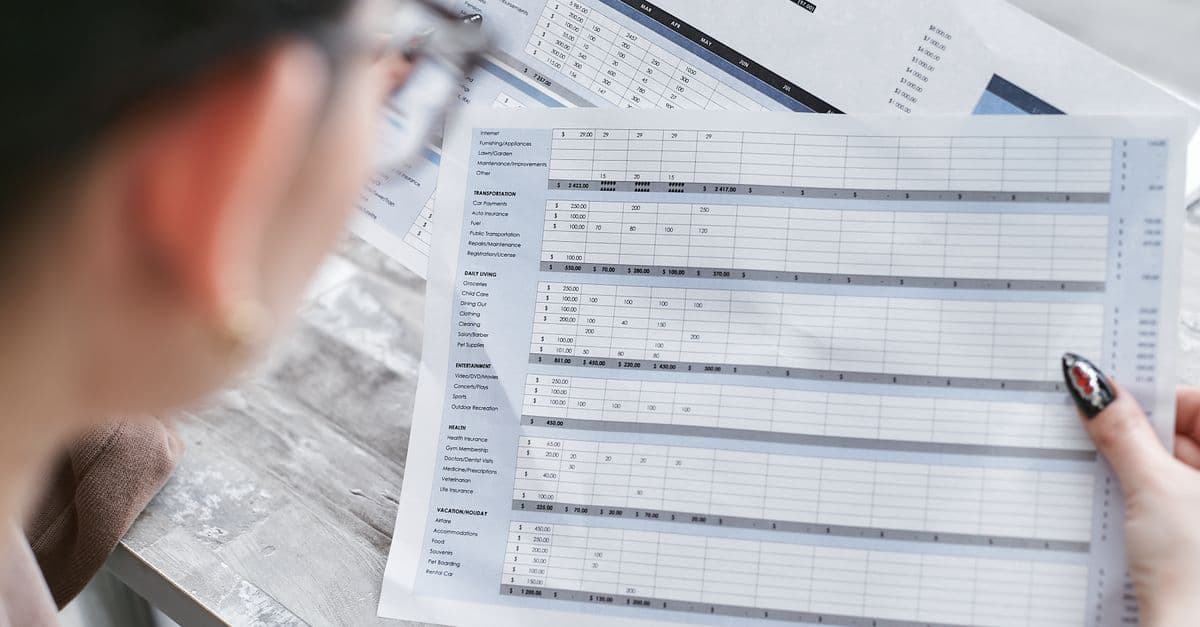
Here's how to become a bookkeeper in Australia: learn double-entry bookkeeping and the monthly bookkeeping cycle, get confident with GST, the BAS and payroll, learn the software employers use (usually Xero, MYOB or QuickBooks), and start in an accounts or bookkeeping role before you take on clients of your own. You don't need a qualification to work as a bookkeeper for an employer, but the recognised one is the Certificate IV in Accounting and Bookkeeping. And if you offer BAS services to clients for a fee, the law says you must be a registered BAS agent with the Tax Practitioners Board, or work for one.
It's a career people come to from all sorts of places: admin and office roles, retail, running their own business, or coming back to work after a break. What they share is a liking for things that add up, and a quiet satisfaction when they do.
This guide covers what bookkeeping is and what bookkeepers do, which qualifications matter, when you need to become a BAS agent, the software to learn, what the job pays in Australia, the rules for going self-employed, and a six-step plan. We offer bookkeeping and Xero courses, so we'll also be clear about what they don't replace and when free training is enough.
What is bookkeeping?
Bookkeeping is recording every financial transaction a business makes (sales, purchases, payments in and payments out) accurately and in order, so the business always knows where it stands and its BAS, tax return and accounts can be prepared from reliable records. Accounting is what happens next: interpreting those records, preparing year-end accounts and advising on tax. Bookkeepers keep the records an accountant relies on.
Almost all of it rests on double entry, the rule that every transaction touches two accounts, once as a debit and once as a credit, so the books always balance. Yes, debits go on the left. No, nobody finds that intuitive at first, and it clicks faster than you'd think once you start posting real transactions.
Those records feed the reports every business owner eventually needs to read. If you want to see where all this ends up, our guide on how to read a balance sheet shows the finished product.
What does a bookkeeper do?
A bookkeeper keeps a business's financial records accurate and up to date, week in, week out. The work has a steady rhythm: transactions processed through the week, the bank reconciled and the month closed, the BAS prepared for businesses registered for GST, and the end of the financial year handed over to the accountant.
A typical month includes most of these:
Processing sales and purchase invoices, and keeping track of who owes the business money and who it owes.
Reconciling the bank: making sure bank statements match the income and payment records, and explaining every difference.
Coding GST correctly and preparing the BAS for businesses registered for GST.
Running payroll, or handing accurate figures to whoever does: wages, PAYG withholding, super and the Single Touch Payroll report that goes to the ATO each pay run.
Checking the accounts for errors and helping the accountant prepare the year-end accounts and tax return.
Doing nearly all of it in cloud accounting software rather than paper ledgers.
Mentioned in this article
Certificate in Bookkeeping & Payroll
Self-paced · verifiable certificate · $189
View courseDo you need qualifications to be a bookkeeper?
Not to work as a bookkeeper for an employer: no law requires a qualification for that. Offering BAS services to clients is different, because a registered BAS agent needs a recognised qualification (more on that below). And even in a salaried role, a recognised qualification makes you easier to hire and easier to trust. These are the names you'll see:
The Certificate IV in Accounting and Bookkeeping (FNS40222), a nationally recognised qualification you can study at TAFE or another registered training organisation. It's the minimum level the Tax Practitioners Board accepts for BAS agent registration.
The Board approved GST/BAS course: a course in basic GST and BAS taxation principles that BAS agents also need. It's often included in a Certificate IV as specific units, but not always, so check with the TPB's qualifications check before you enrol anywhere.
Professional associations: the Institute of Certified Bookkeepers, the Australian Bookkeepers Association and the Institute of Public Accountants are among the associations the TPB recognises. Membership brings resources and networks, and being a voting member lowers the experience you need to register as a BAS agent.
Traineeships: an Australian Apprenticeship can be a traineeship, where you work in a paid accounts role while training for a nationally recognised qualification.
Do you need to be a BAS agent?
You need to register as a BAS agent if you'll provide BAS services to clients for a fee in your own right. That covers more than lodging the BAS itself: working out or advising on a client's GST, PAYG withholding or other BAS obligations counts too, wherever the client is relying on you to get it right. The TPB's page on who needs to register sets it out, and unregistered BAS work for a fee carries civil penalties of up to $82,500 for an individual.
You don't need to register to keep the books and prepare the BAS for the business that employs you, because you're not providing a service to a client. Nor do you if you work for a registered BAS or tax agent rather than providing BAS services in your own right. Coding invoices and entering data under a registered agent's instruction and supervision isn't a BAS service at all. That's why so many bookkeepers start inside a practice: you get the experience the registration asks for while somebody else holds it.
A Certificate IV is worth it if the jobs you want ask for it, if you plan to register as a BAS agent, or if you might move towards accounting later, since a diploma or degree in accounting carries on where it stops. It probably isn't worth it yet if you only want to keep the books for your own business, or if you're testing whether you even like the work. In both cases, practical skills and confidence in the software come first, and you can add the qualification once you know where you're heading.
Which bookkeeping software should you learn?
Learn whichever package the job ads in your area keep naming. In Australia that's usually Xero or MYOB, both widely used, with QuickBooks also common enough that it's worth searching your area before you choose. Our comparison of Xero vs QuickBooks goes through the differences, including where MYOB fits.
Learn one tool properly before touching its competitor. Skills transfer; split attention doesn't. Once you've reconciled a few hundred transactions in one package, the second comes far more quickly, because the bookkeeping underneath is identical.
Spreadsheets still matter too. You'll use them for working papers, imports and the odd client who hasn't moved to software yet, so comfortable everyday Excel is part of the job.
Bookkeeper salary in Australia
Median full-time pay for bookkeepers was $1,400 a week before tax in May 2025 (Jobs and Skills Australia, checked October 2026). Read it as the middle of the whole occupation rather than a promise for any single job: location, industry, hours and responsibility all move you around it.
Payroll is a closely related path worth knowing about. The same source gives $1,606 a week for payroll clerks, and offering payroll alongside the books makes a bookkeeper far more useful to a small business.
Where it leads: senior bookkeeper, accounts manager and BAS agent with your own clients are common next steps, and some bookkeepers go on to qualify as accountants through CPA Australia, Chartered Accountants ANZ or the Institute of Public Accountants. That's a longer road through a degree and professional exams, and the same source gives $2,003 a week for accountants.
Self-employed bookkeepers and BAS agents set their own rates, so there's no national figure that means much. What you earn depends on how many clients you take on, what you offer and how you price it.
Employed or self-employed: how to start a bookkeeping business
Employed bookkeepers work in-house for one business, or for an accounting or bookkeeping practice that looks after many. You get colleagues to learn from, steady pay and somebody else's systems to work within, which is why it's the best place to start. Self-employed bookkeepers choose their own clients, hours and prices, and take on everything else as well: an ABN, finding work, chasing their own invoices, insurance and the legal duties below.
Taking on clients is the part of this career with real rules attached, and the big one is registration. To register as a BAS agent with the TPB, you need three things: at least a Certificate IV in bookkeeping or accounting, the Board approved GST/BAS course, and 1,400 hours of relevant experience in the past four years (or 1,000 hours if you're a voting member of a recognised association). You also need to meet the TPB's fit and proper requirements and hold professional indemnity insurance.
Registration isn't the finish line. Registered agents follow the Code of Professional Conduct, keep up continuing professional education to renew, and keep their insurance current. Engagement letters that set out the scope of your work for every client are sensible too.
One more set of rules arrived in 2026. Since 1 July 2026, accountants and other professionals who provide certain services, such as helping to set up a company, providing a registered office address or handling a client's money in a transaction, have anti-money laundering obligations with AUSTRAC. Everyday bookkeeping and BAS work isn't on that list, but if what you offer goes further, check AUSTRAC's list of professional designated services before you start.
Demand is moving in your favour, too. Under Payday Super, from 1 July 2026 employers pay super at the same time as wages, so it reaches each employee's fund within seven business days of payday instead of once a quarter. That means more payroll work, done more often, for every small business with staff, and some of them will want somebody else to do it.
How to become a bookkeeper: a 6-step plan
Here's the route we'd suggest to a friend starting from scratch. If you already work in accounts, skip ahead to the step that matches where you are.
Step 1: learn the fundamentals. Double entry, the sales and purchase ledgers, bank reconciliation, GST and the month-end routine, before any particular software.
Step 2: learn the software your local job ads name, which in Australia usually means Xero or MYOB.
Step 3: decide whether you need the Certificate IV now. If the jobs you want ask for it, or you plan to register as a BAS agent, start one with the GST/BAS units included. If not, you can add it later.
Step 4: get experience. Accounts assistant, accounts payable and receivable, and payroll roles, a traineeship, or a junior job in a bookkeeping practice all teach you how real books behave, mistakes included, and count towards the hours registration asks for.
Step 5: add payroll if it suits you. Single Touch Payroll and Payday Super make it a skill small businesses need, and it widens the jobs you can apply for and the services you can offer later.
Step 6: if you want to go self-employed, register as a BAS agent with the TPB, sort out your insurance and engagement letters, and then find your first clients.
Where OBA fits, and when to skip it
Our Certificate in Bookkeeping & Payroll covers step one: ledgers, bank reconciliation, GST and the BAS, and payroll with super, practised hands-on, finishing with a month of books, a BAS and pay runs for a small business. The Certificate in Xero covers step two, and if you want the full set, the Advanced Xero Bundle adds Advanced Xero and Xero Payroll. Working in MYOB instead? The Certificate in MYOB teaches the Australian edition. Every course is self-paced, you pay once and keep lifetime access, and the certificate at the end can be verified online by an employer.
The pattern we see with career changers is that the first set of finished work matters more than any number of lessons. It turns "I'm learning bookkeeping" into "here's a set of books I've kept", which is a far easier conversation to have in an interview or with a first client.
Be clear about what our certificates are, though. They're certificates of completion, not a nationally recognised qualification such as the Certificate IV, not Xero's own certification, and they don't register you as a BAS agent. If a client or employer requires the Certificate IV, our courses give you a practical start and the software skills, but they don't replace it.
And here's when we'd tell you not to enrol with us yet. If you plan to set up taking BAS clients and already have the experience, the Certificate IV with the GST/BAS units, and then TPB registration, is your first priority. And if you only need the basics of the software, Xero runs free training through Xero Central and an advisor certification of its own, which may be all you need.
Not sure which fits? The free info pack sets out what each course covers, so you can decide before spending anything.
Good to know
Common questions
A bookkeeper records and checks a business's financial transactions. That means processing sales and purchase invoices, reconciling the bank, coding GST and preparing the BAS, running payroll with super and Single Touch Payroll, and keeping the records accurate enough for an accountant to prepare the year-end accounts, nearly always in accounting software.
Yes. Many bookkeepers start in accounts assistant roles, traineeships or junior jobs in a bookkeeping practice, and you don't need a qualification to be employed as a bookkeeper. Learning double entry, GST and one accounting package first makes those first roles much easier to land.
Not to work for an employer. But if you provide BAS services to clients for a fee, you must be a registered BAS agent with the Tax Practitioners Board, which needs at least a Certificate IV in bookkeeping or accounting, a Board approved GST/BAS course and relevant experience. Working for a registered agent is the exception.
Jobs and Skills Australia puts median full-time pay for bookkeepers at $1,400 a week before tax, from May 2025 figures. Self-employed bookkeepers and BAS agents set their own rates, so their earnings depend on how many clients they take on and what they charge.
Yes. Plenty of bookkeepers work from home with cloud software, but if you'll provide BAS services to clients for a fee you must register as a BAS agent first, with professional indemnity insurance. Engagement letters and a clear scope for each client are sensible essentials too.
You need at least a Certificate IV in bookkeeping or accounting, a Board approved course in basic GST/BAS taxation principles, and 1,400 hours of relevant experience in the past four years, or 1,000 hours if you're a voting member of a recognised association. You then apply to the Tax Practitioners Board, which also checks you're fit and proper and insured.
Learn the package the job ads in your area name most often, which in Australia is usually Xero or MYOB. QuickBooks is also used. The bookkeeping underneath is the same, so a second package is much quicker to pick up once you know one well.